Home Security Overview
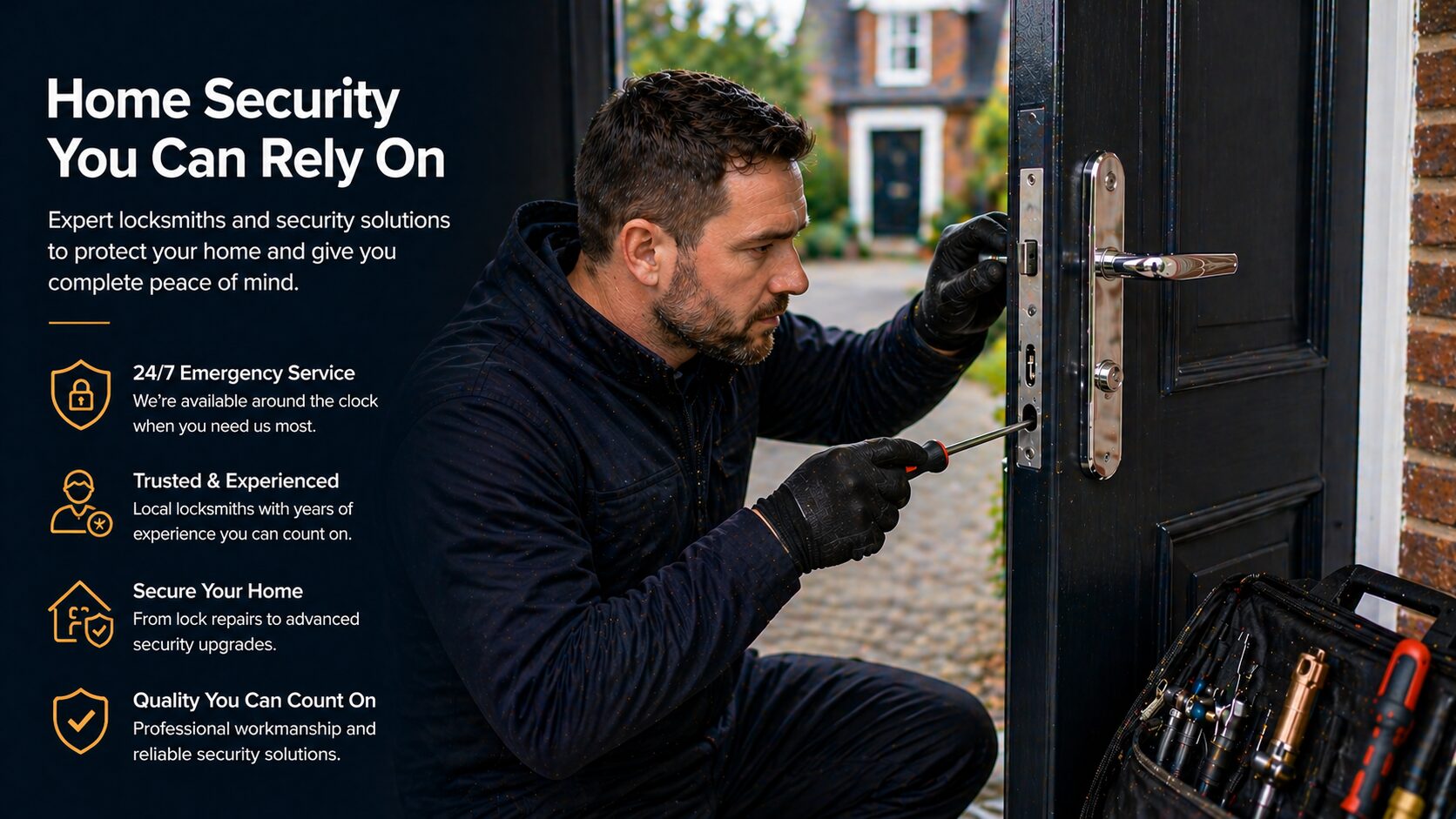
Home Emergency security response is designed to react quickly when a property has been compromised, helping to make it secure until a permanent repair can be completed.
Whether the issue involves broken glass, a damaged door, a failed lock or lost keys, the aim is simple: you should be able to go to bed knowing your home is secure.
Windows and Broken Glass
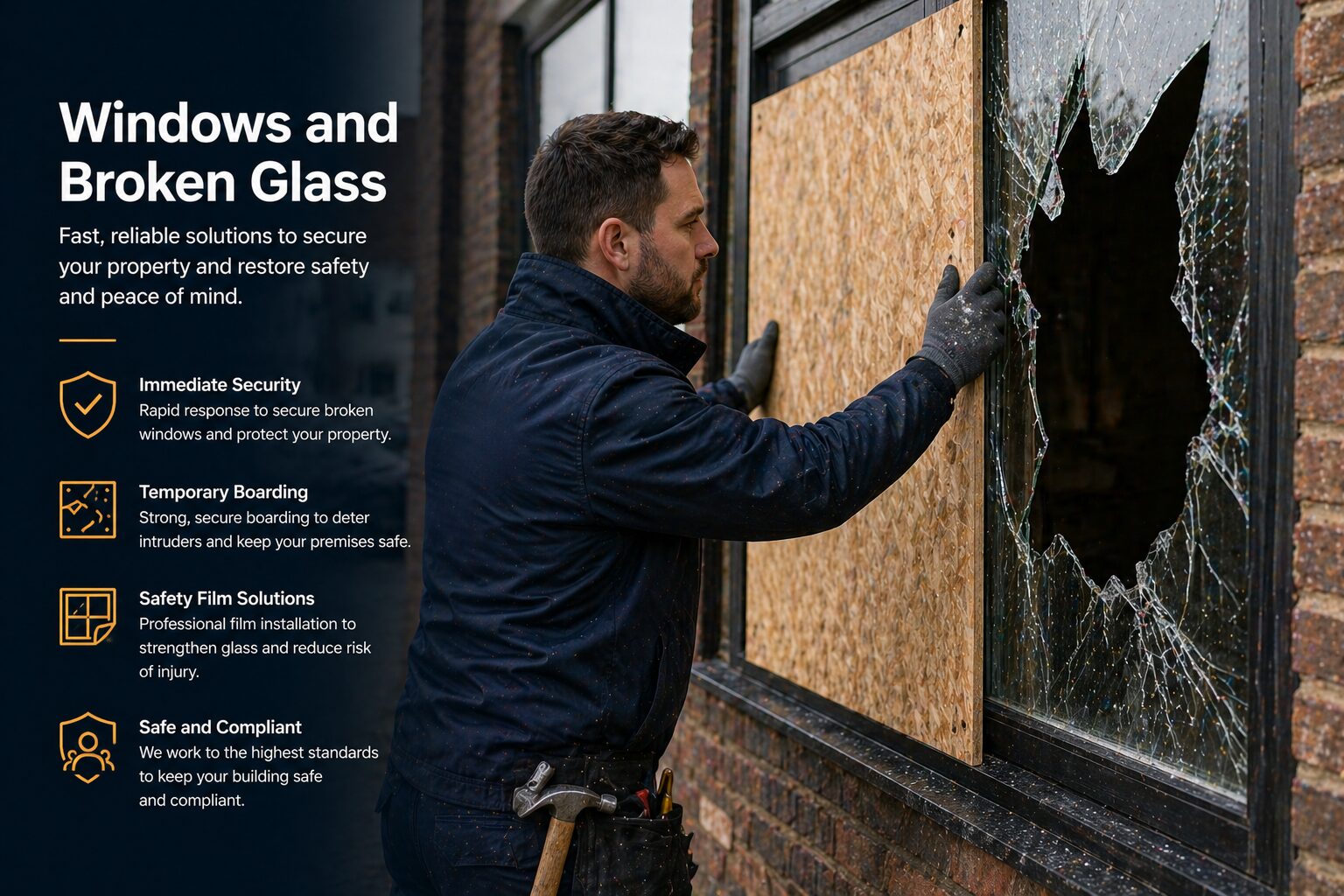
If a window has been broken accidentally or intentionally, the response will depend on the extent of the damage.
If the broken pane is single glazed, or both panes of a double-glazed unit are damaged, the window will usually need to be boarded for security. This is normally done by cutting a sheet of plywood to size and securing it over the broken window.
In many cases, this can be done without causing additional damage to the frame or door.
If only one pane of a double-glazed unit has broken, it may be possible to apply safety film. This is a clear, tough plastic film placed over the damaged or crazed pane to make it safer until the unit can be replaced.
Back to top ↑Doors and Locking Systems
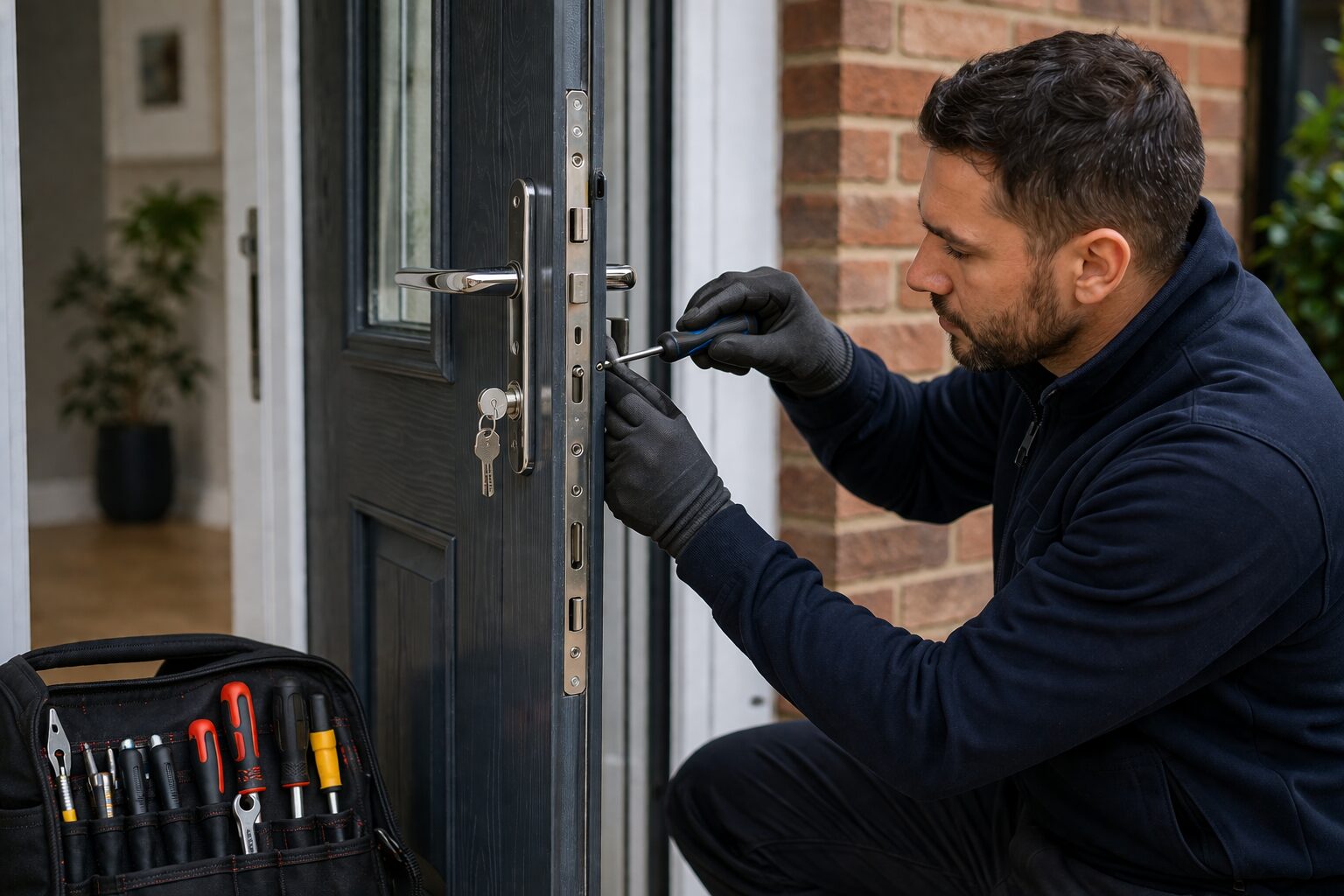
Doors are more complex than windows because there are many different lock types, door materials and locking mechanisms. A generic answer is rarely possible without inspecting the door.
Common security issues include being locked out, a door that will not lock, a snapped key, a damaged door, garage door security and key safe concerns.
Back to top ↑Locked Out, Lost, Forgotten or Stolen Keys
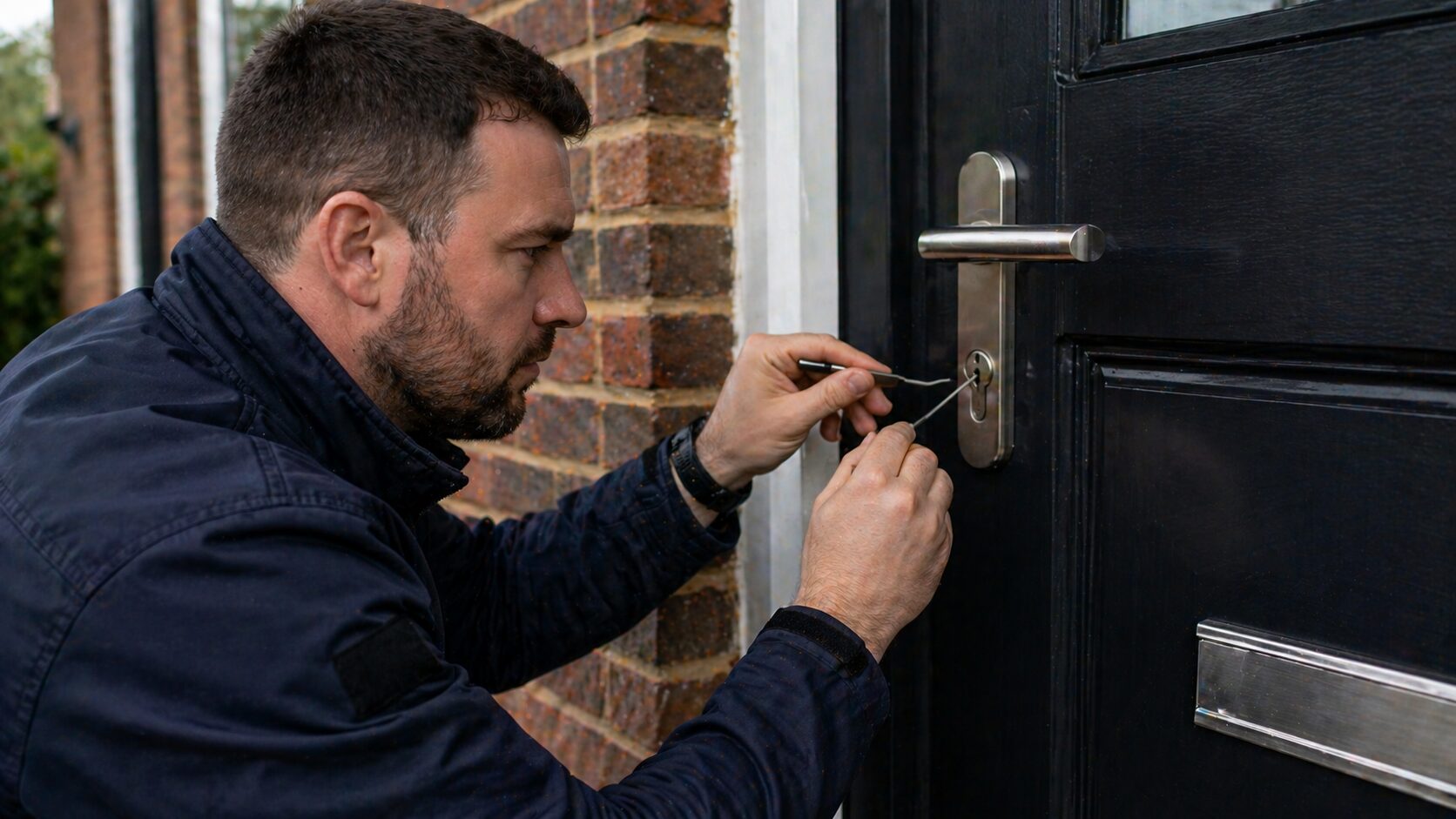
Non-destructive entry is always the ideal approach where possible. A locksmith may check whether there is another way into the property, such as an open window, or whether the lock can be picked or bypassed safely.
Depending on the lock type, entry may be possible using specialist methods such as latch slipping, picking or reach tools.
If the only practical solution is to drill the barrel on a standard Euro cylinder lock, the locksmith will do this and fit a temporary replacement cylinder with appropriate keys.
Where keys have been stolen, cylinders should normally be replaced on all locks that the stolen keyring could access.
Temporary cylinders may not offer the same level of protection as higher quality locks. For better long-term security, it is worth fitting anti-bump, anti-snap and anti-drill cylinders.
Back to top ↑My Door Won’t Lock
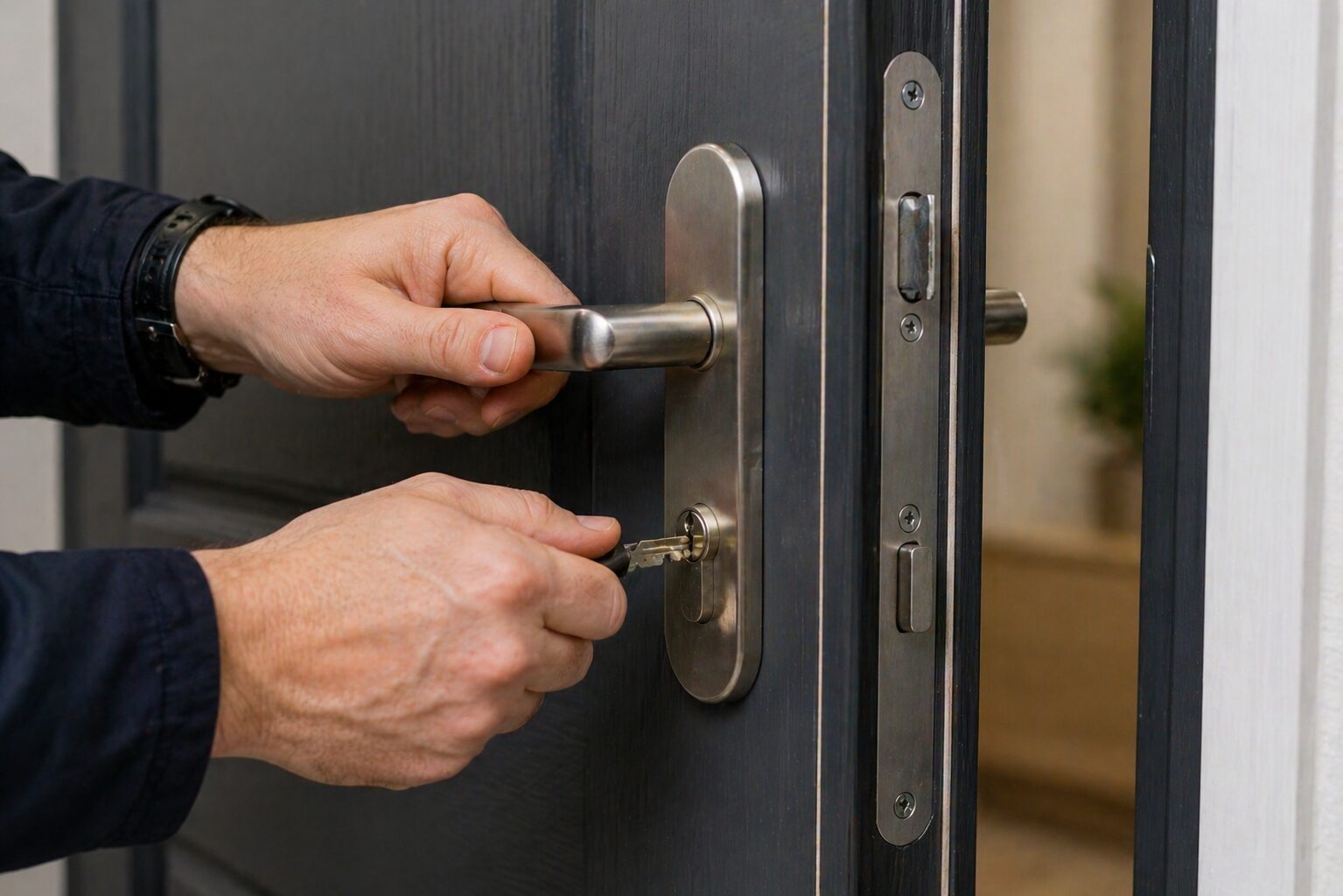
If you have the key but the door will not lock properly, there are usually two likely causes: the cylinder or the locking mechanism.
Worn cylinder
If the cylinder is worn or faulty, it can usually be replaced with a generic temporary cylinder and new keys issued.
Failed mechanism
Multipoint locking mechanisms, especially on uPVC doors, can wear, jam or fail. There are many different variations, so it is unlikely that a locksmith will carry the exact replacement mechanism on the van.
In those cases, sash jammers or another temporary securing method may be fitted. These manually operated locks can secure the door from the inside until a permanent repair is arranged.
If the affected door is the main entrance and there is no alternative lockable exit, the door must be lockable from both sides. In that situation, sash jammers may not be appropriate.
Back to top ↑Key Snapped in the Lock
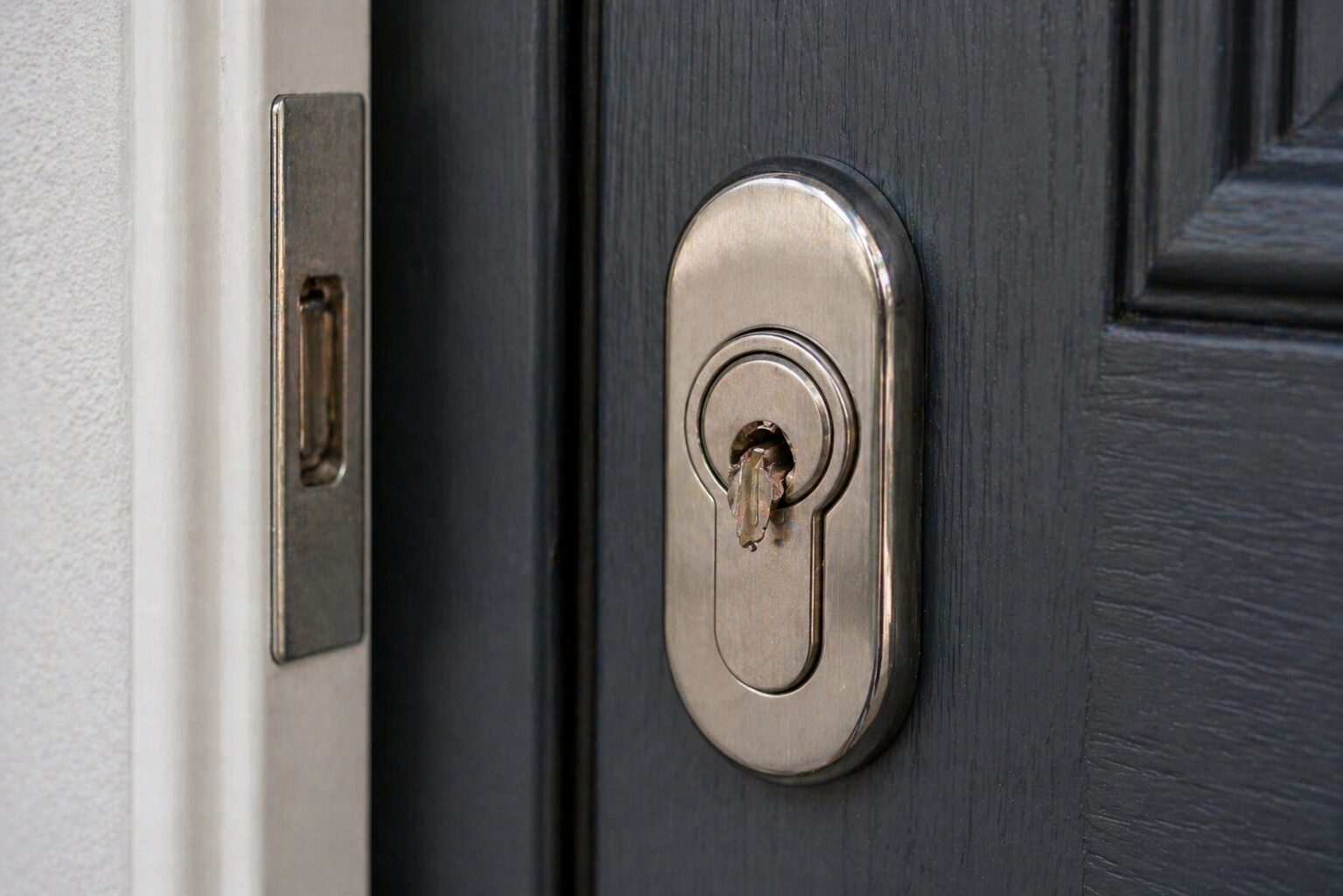
If a key snaps in the lock, the good news is that the door may already be unlocked internally. The locksmith may only need to turn the barrel to gain entry.
Once the door is open, a specialist tool can often be used to remove the broken key section from the lock, allowing you to use a spare key if available.
Back to top ↑Door Destroyed or Severely Damaged
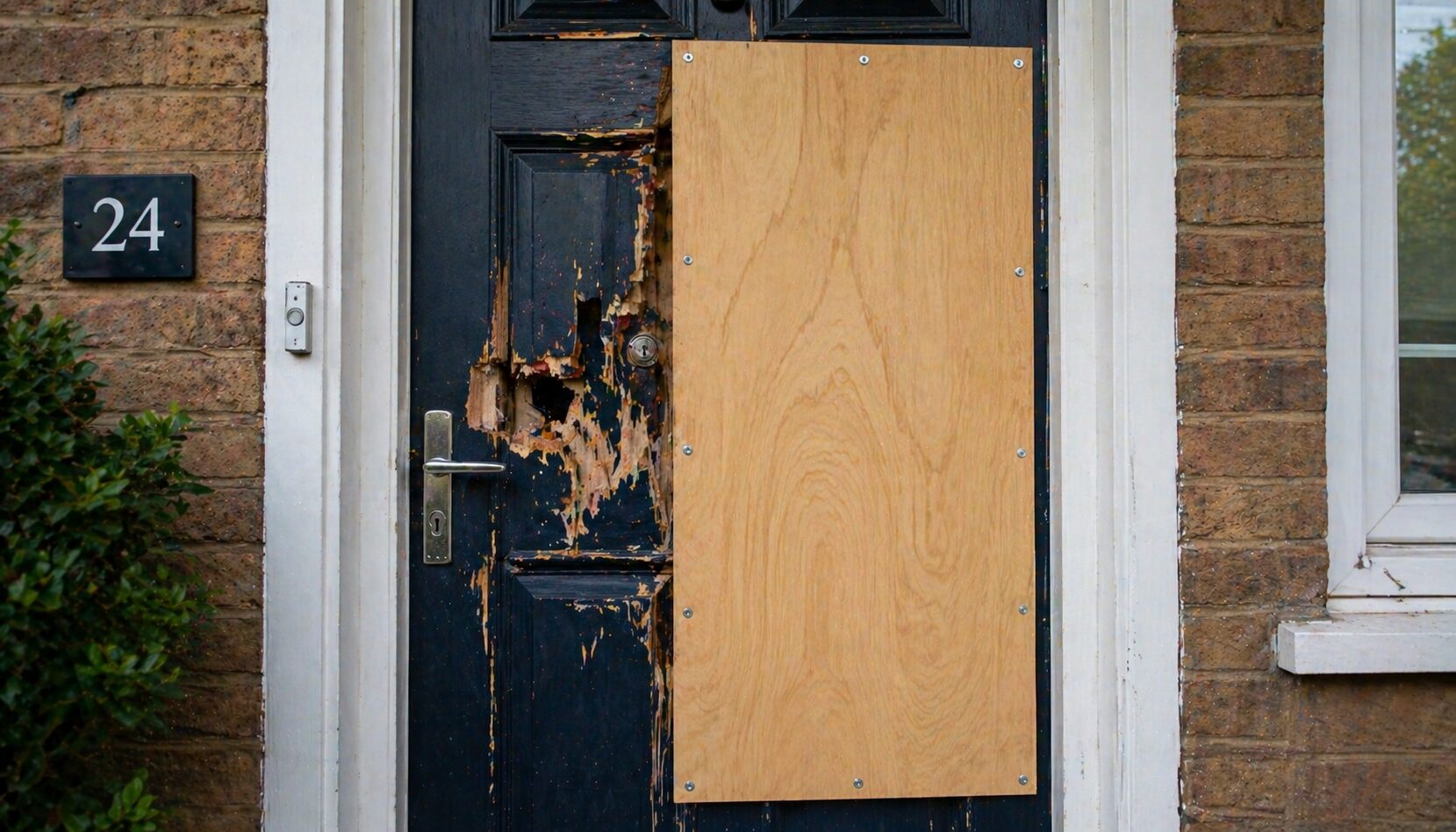
If a door is comprehensively damaged and cannot be made safe or secure with lock repairs alone, boarding may be the only suitable temporary option until a replacement door can be fitted.
The priority in this situation is to secure the property and reduce the risk of unauthorised access.
Back to top ↑Garage Doors
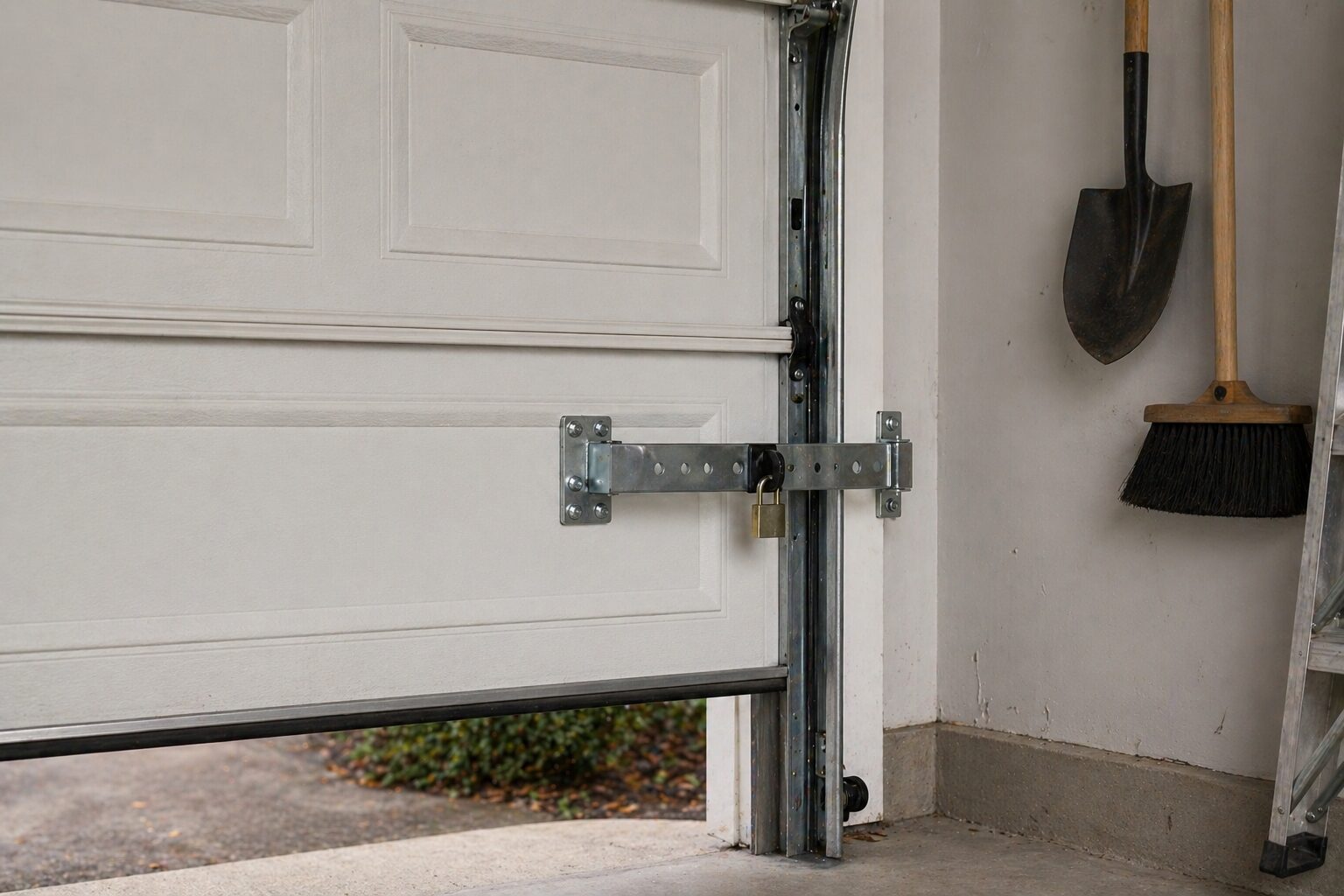
If your property has an attached garage with internal access into the main house, the garage can often be secured from the inside until a garage door specialist can attend.
If the garage is a separate building, you may need to check your insurance cover to confirm whether the issue is included.
Back to top ↑Key Safe Advice
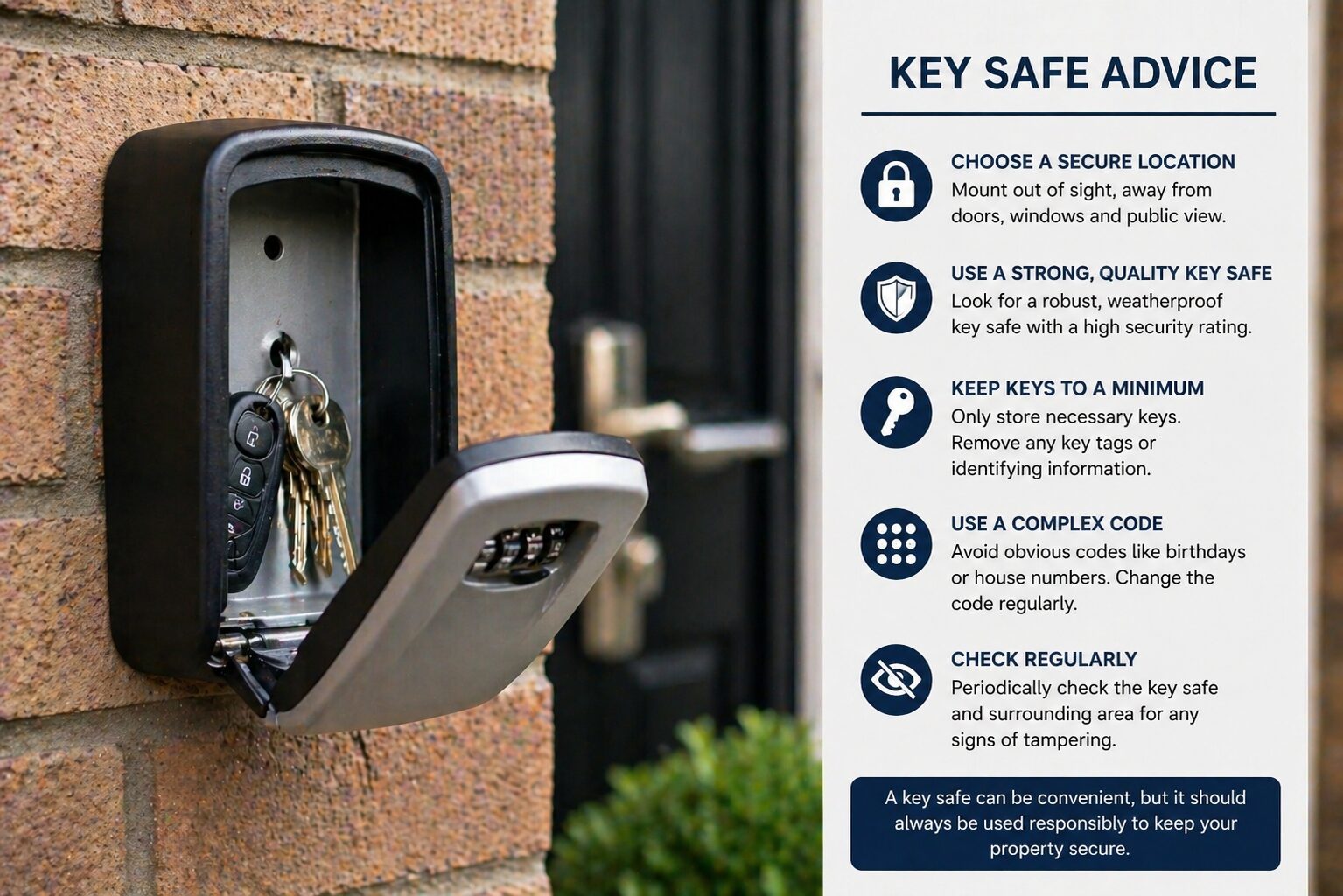
Wall-mounted key safes can be very useful, particularly where elderly or vulnerable residents may need trusted people to access the property.
However, they should be installed out of sight from passers-by wherever possible. Visible key safes can attract attention and may be targeted if they can be levered from the wall.
Leaving a spare key with a trusted relative or neighbour may sometimes be a safer option.
Never hide a key under a doormat, plant pot or similar obvious location. These are the first places an intruder is likely to check.
Back to top ↑Need help securing your property?
If your home has been left insecure due to broken glass, lock failure, lost keys or damage to a door, a rapid temporary repair can help make the property safe until a permanent solution is arranged.
Contact Us