Emergency Roofing Overview
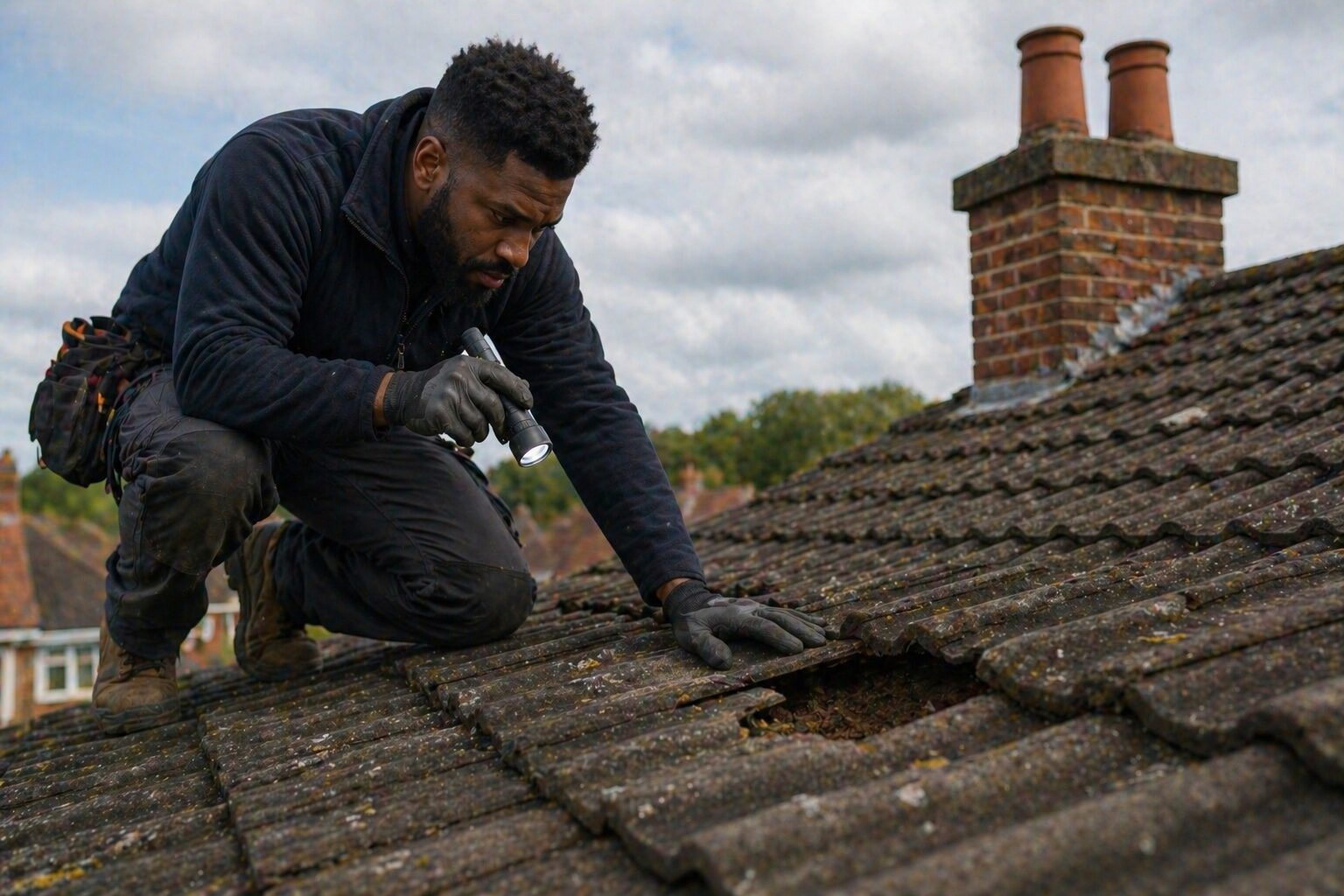
Resolving Sites Ltd provides rapid attendance for emergency roofing damage and active roof leaks rather than general roofing services. The main aim of an emergency roofing response is to reduce further internal damage and make the property safe until a proper permanent repair can be carried out.
This page explains what is commonly covered, what a temporary repair means, the main causes of roof leaks, and the practical realities around access, weather and safety.
Coverage and Temporary Repairs
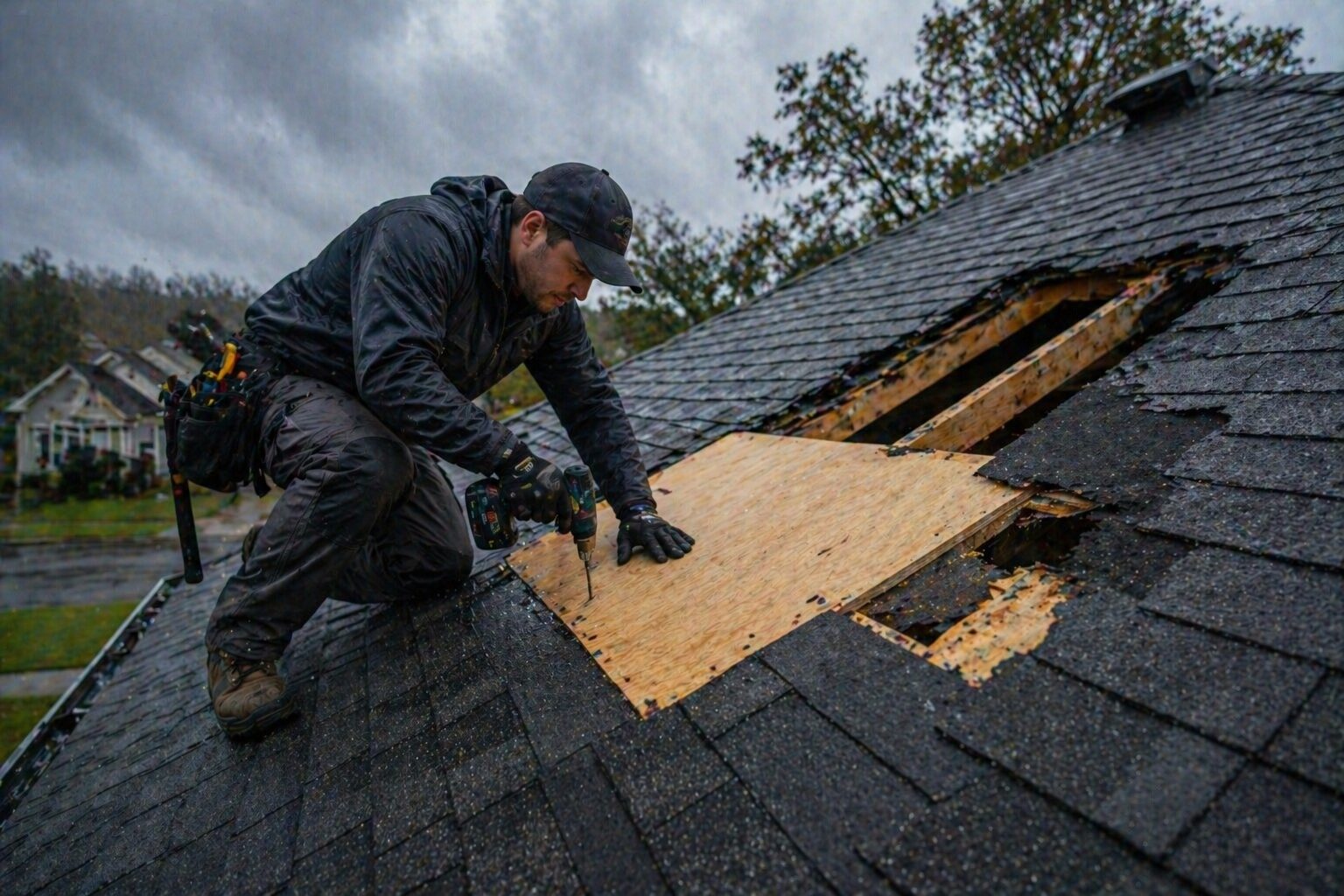
An emergency roofing repair is normally authorised as a temporary repair, unless a permanent repair can be completed for the same cost within policy limits. It is important not to treat a temporary repair as a permanent solution.
Some temporary repairs may last for years, while others may only hold for days depending on the nature of the damage and the materials involved. The purpose of a temporary repair is to halt water ingress and reduce further internal damage until a full repair can be arranged.
Back to top ↑Slipped, Missing or Broken Tiles
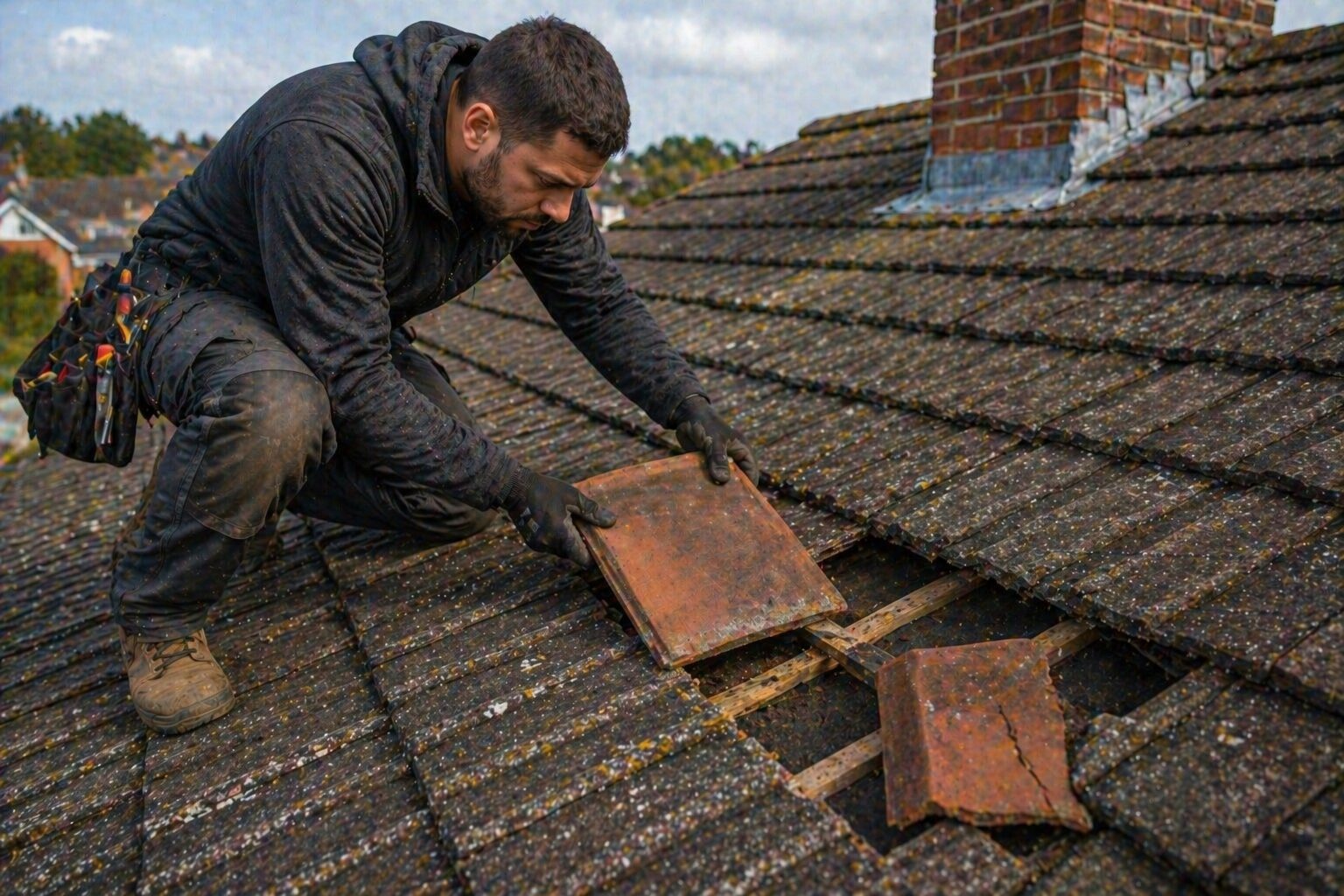
A slipped tile is one of the most common causes of a roof leak. This is often caused by the fasteners weakening over time through rust or nail fatigue, allowing the tile to slide out of position.
If the tile itself is intact, a roofer can often simply secure it back into place and resolve the issue. If the tile is broken or missing, a temporary substitute is often used to seal the gap until a matching tile can be sourced.
There are countless tile profiles and sizes in use, so roofers cannot carry every type on the van. Even older clay tiles and slates can often be matched later through specialist salvage suppliers.
Back to top ↑Failed Flashing
Where lead flashing has cracked or lifted, it can often be temporarily sealed using flashing tape, silicone or a combination of the two. While this can be effective in the short term, a proper permanent repair is still recommended as soon as possible.
Back to top ↑Crumbling Concrete or Mortar Valleys
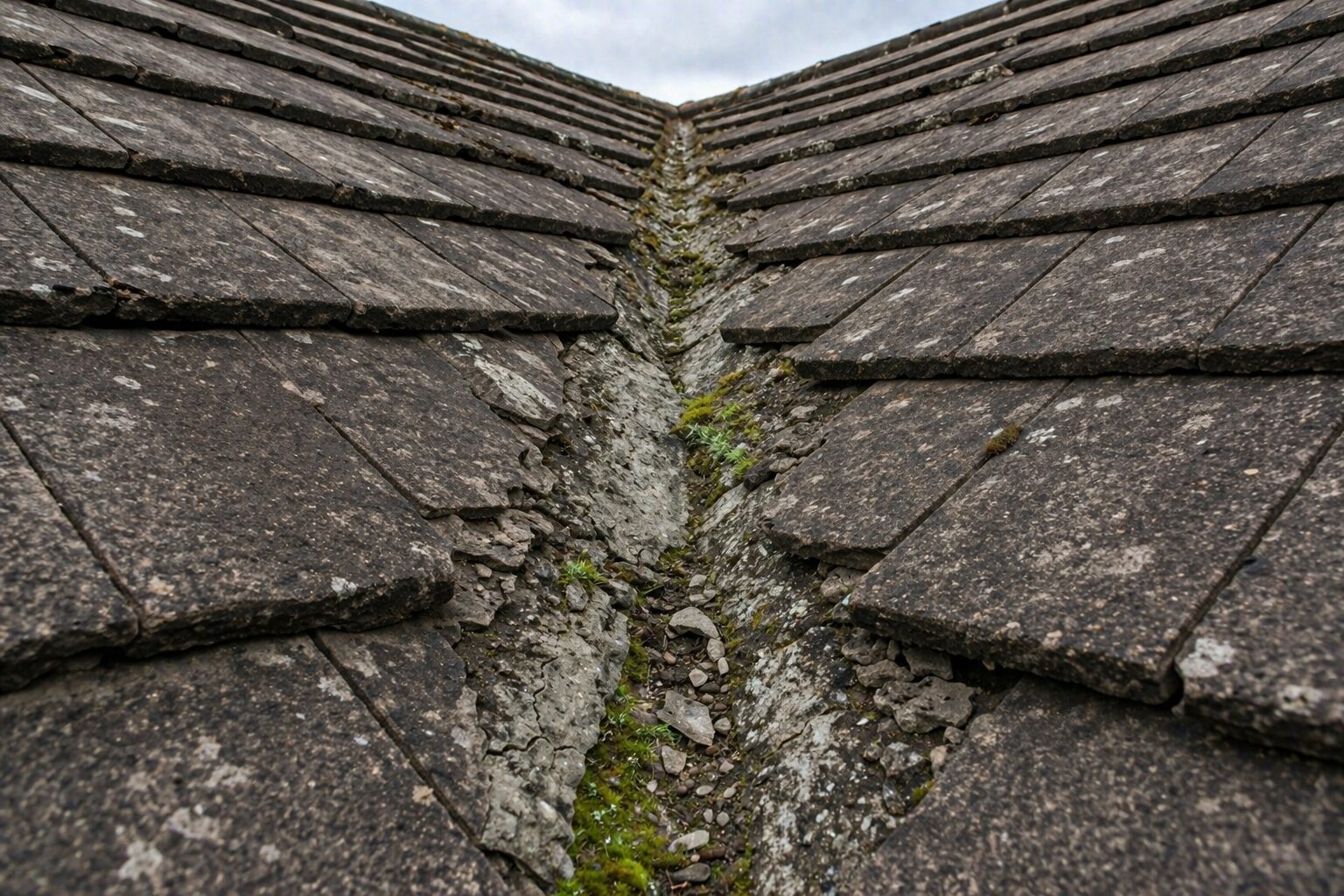
What is often described as crumbling concrete is, in reality, usually failing mortar. This is commonly seen where two sloping roof elevations meet and form a valley leading down towards the guttering.
Sometimes the issue is simply that the valley has become blocked with moss or leaves, causing water to build up and back up under the tiles. In that case, clearing it out may solve the problem.
In other cases, freeze-thaw damage causes the mortar to become brittle and cracked, making leaks difficult to trace. Temporary repairs can sometimes be attempted with flashing tape and silicone, but a permanent repair should be arranged as soon as possible.
Back to top ↑Flat Roofs and Thatched Roofs
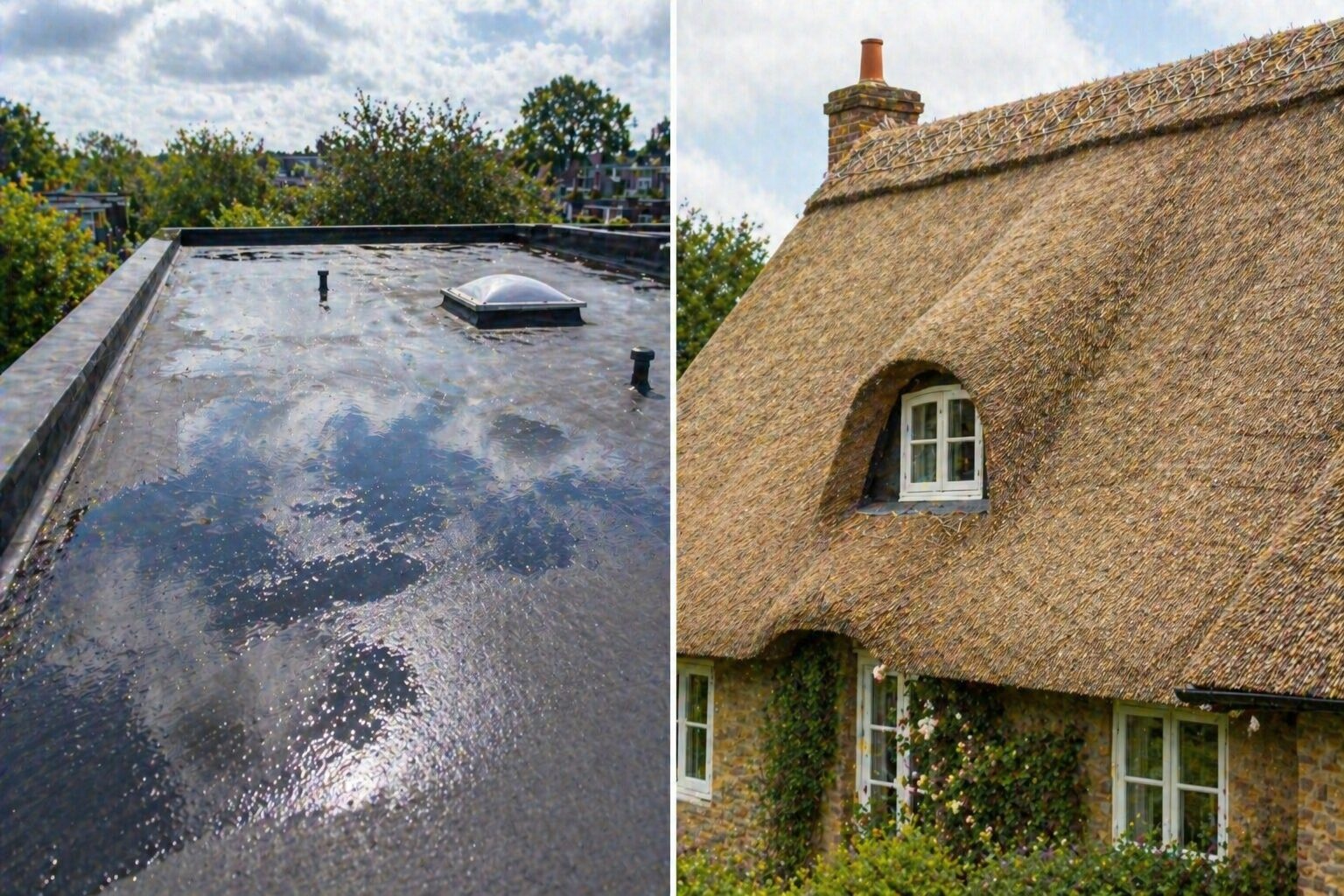
Flat roofs
A flat roof will often have an expected life span of around ten years, although some newer materials may last longer. Leaks on flat roofs can be notoriously difficult to pinpoint and may not always be suitable for a reliable temporary repair.
An attempt will always be made where possible, but if there is no obvious point of entry and the roof is already ageing, it may be more sensible to have the roof recovered by a specialist.
Thatched roofs
Thatched roofs are highly specialised. If you have one, the correct person to contact is a specialist thatcher with the right experience in that type of construction.
Back to top ↑Skylights and Conservatory Roofs
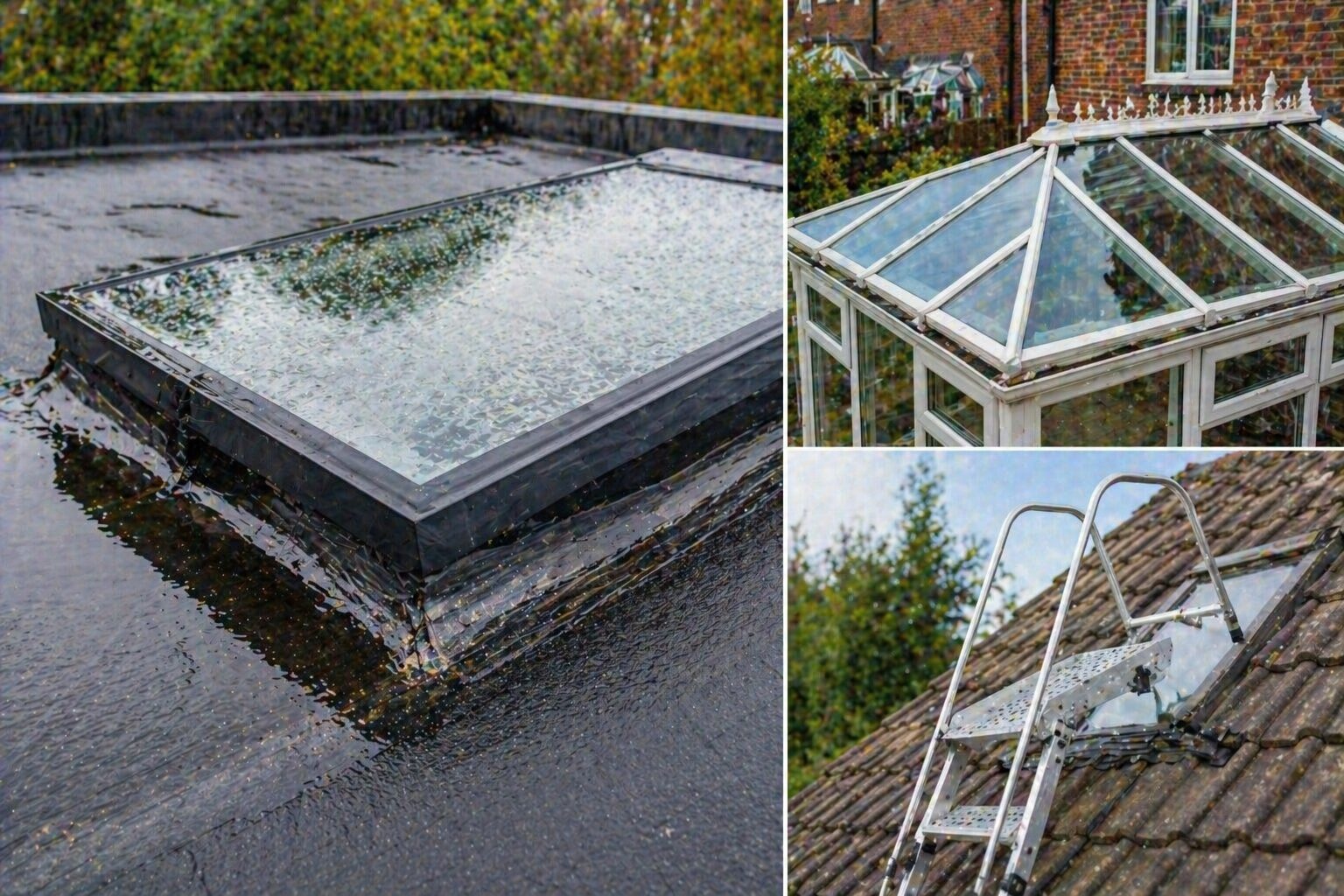
Skylights
If the leak is around the frame, a temporary repair can often be attempted. If the glass itself is broken, this is normally a specialist glazing issue rather than a roofing repair.
Conservatory roofs
Conservatory roofs are also specialist work. Some roofers can work on them, but many cannot due to the access equipment required and the fact that you cannot safely walk on most conservatory roofs.
Where requested, every effort can be made to locate a contractor with the appropriate access capability and experience.
Back to top ↑Felt Beneath the Tiles
Under roof tiles there is usually a layer of felt. This often prevents minor issues in the outer roof covering from becoming visible inside the house, until eventually the felt itself deteriorates.
Over time, felt becomes brittle and tears more easily. Replacing roof felt normally involves stripping back large sections of the roof and is usually outside the scope of a standard Home Emergency claim.
Back to top ↑Guttering
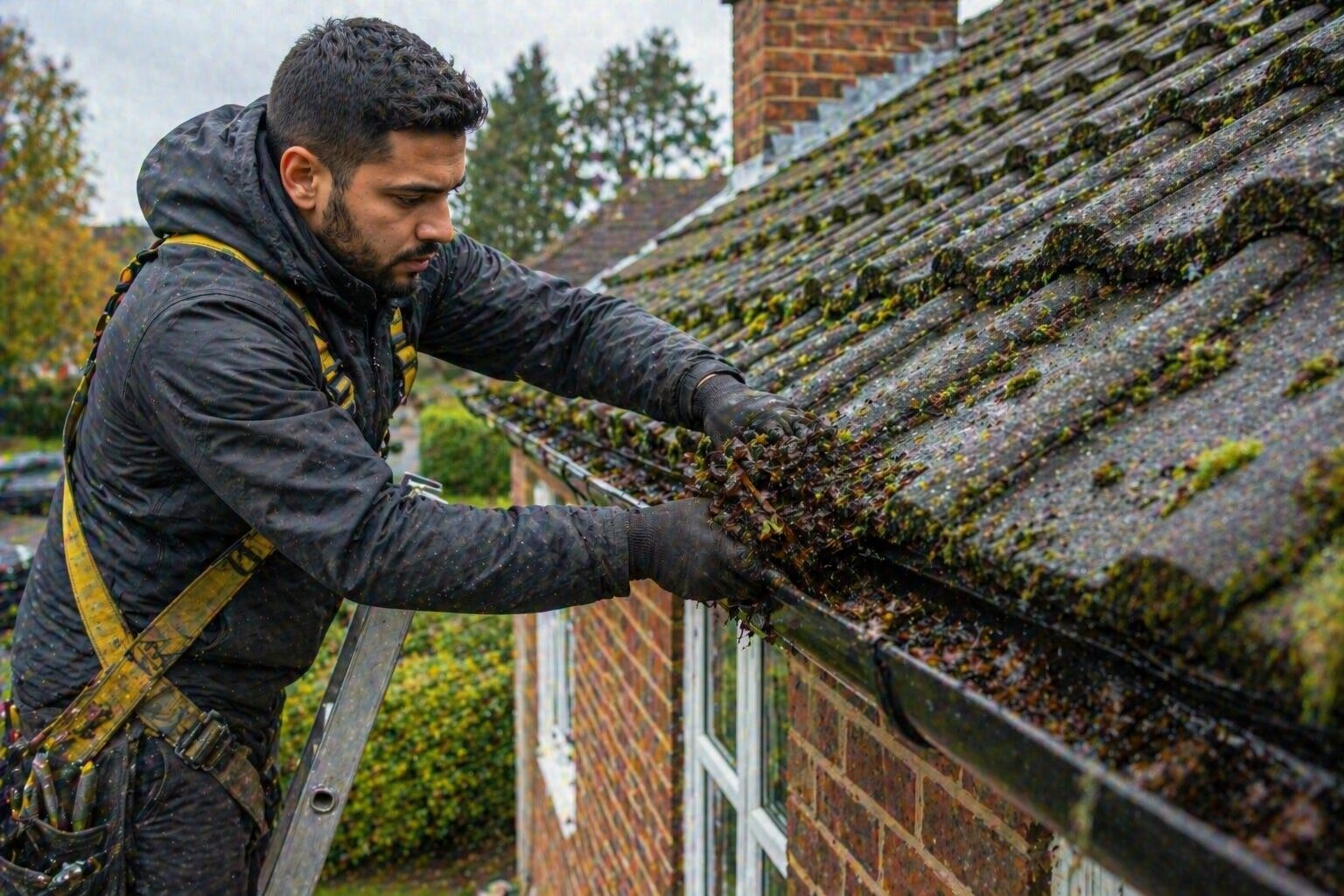
Keeping guttering clear is one of the simplest and most effective ways to reduce roof-related water issues. Moss, leaves and other debris should ideally be cleared at least once a year.
There are many affordable contractors who can do this, and there are also modern extending pole systems that allow gutter cleaning to be carried out safely from ground level.
Back to top ↑Mitigating Water Damage
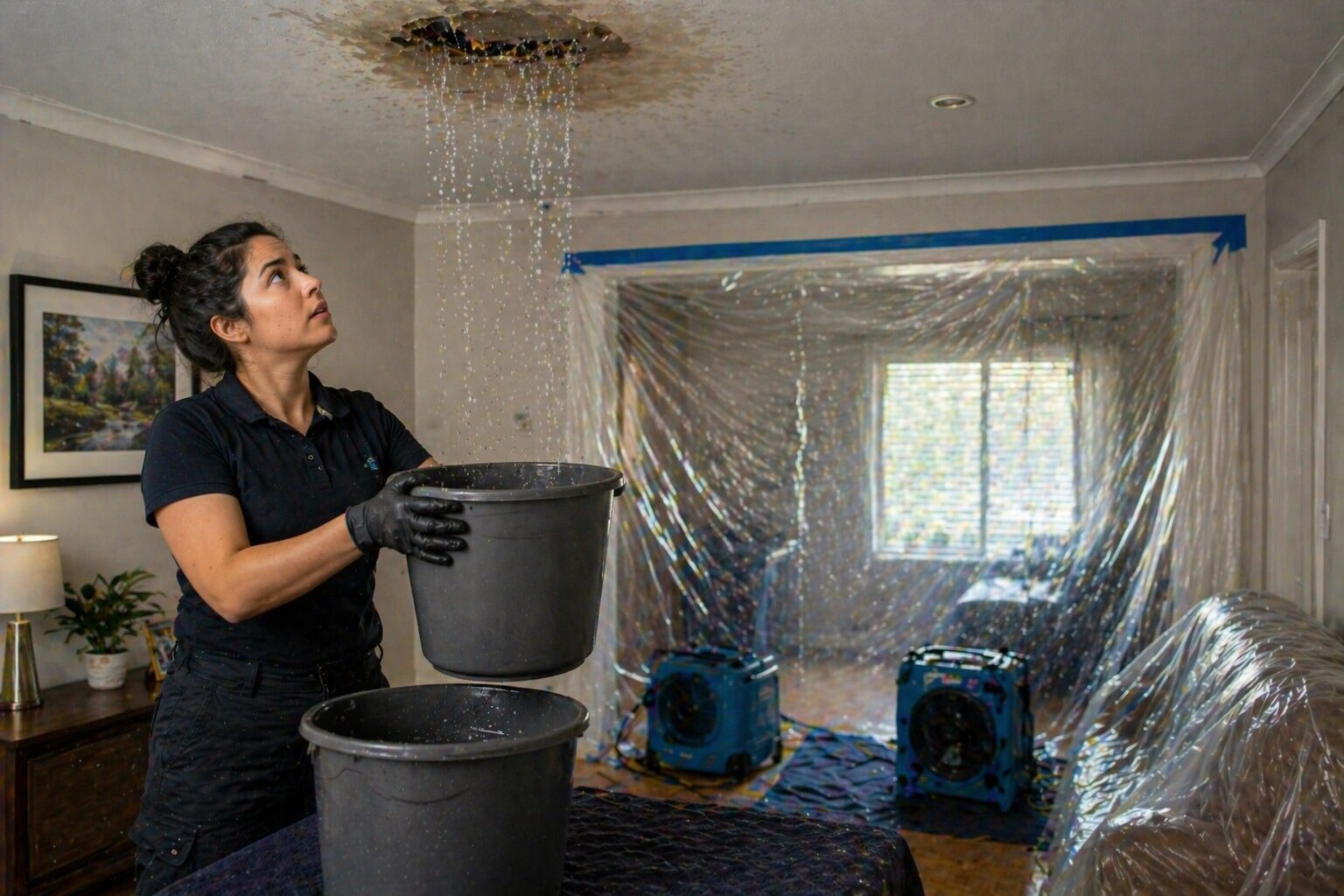
If water is entering the house, there is usually a duty to prevent as much damage as possible until the leak can be stopped. Use buckets, pans or whatever containers you have available to catch the water and limit damage to floors, ceilings and furnishings.
It is also important to be realistic. Roofers cannot work safely in darkness or severe weather, and after major storms there may be a significant backlog of damaged properties. In some cases it may take a few days for attendance to be possible.
Back to top ↑Access and Health & Safety
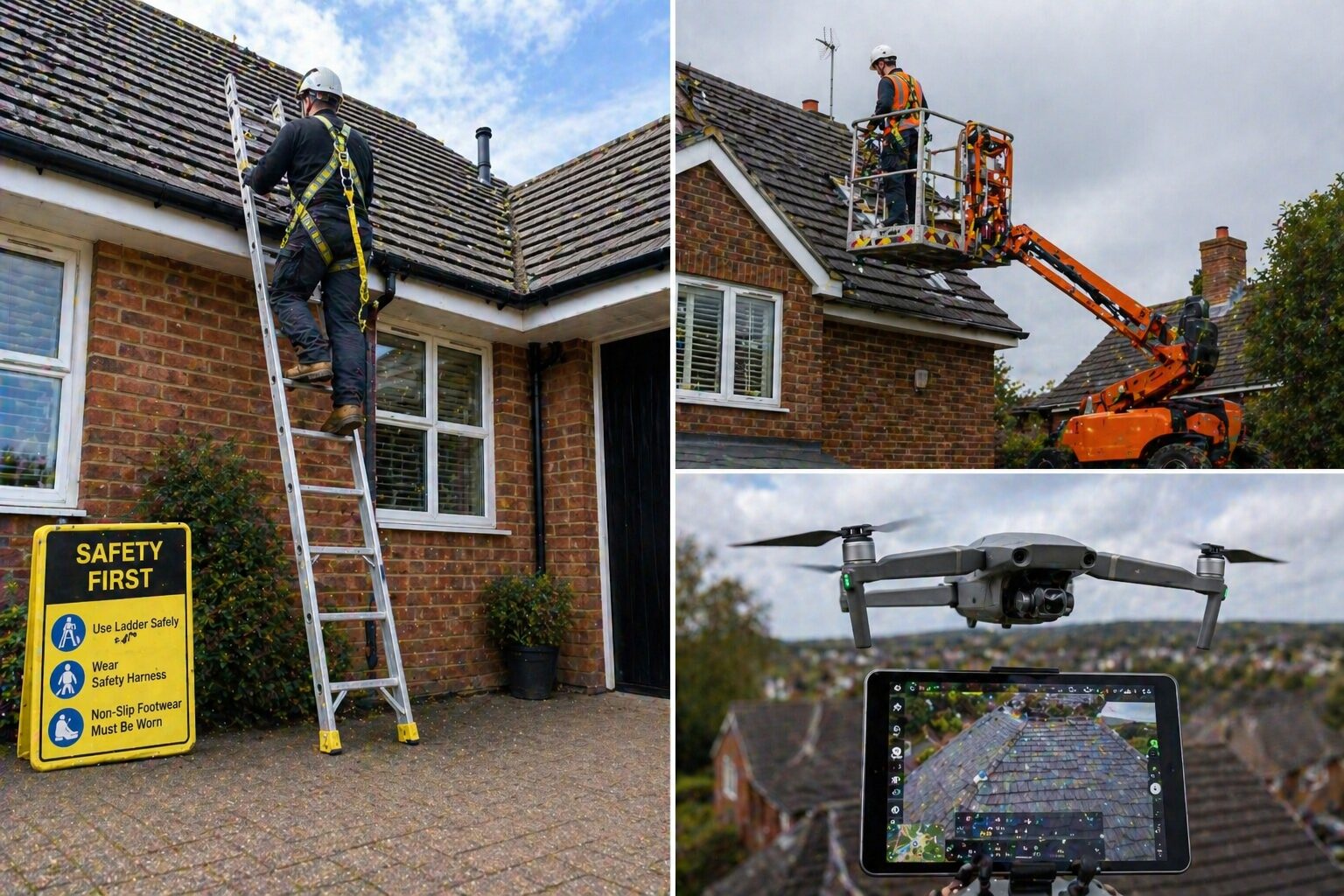
Ladder access
The first question is whether the affected area can be reached safely with a ladder, or whether scaffolding, a cherry picker or another access method is required.
Height and insurance
Standard working at height cover will usually allow work on a bungalow or a typical two-storey house. Buildings of three storeys or more often require enhanced insurance and equipment. It is important to make this clear when booking a roofer.
Alternative access
In some cases, such as blocks of flats, there may be internal access to a flat roof. If so, this should always be mentioned. Many roofing firms also now use drones to survey roofs from ground level before deciding how to proceed.
Daylight and weather
No reputable roofing firm will send a technician onto a roof in the dark or in dangerous wind and rain conditions. This can understandably be frustrating, but it is essential for worker safety.
Back to top ↑Are You Sure It Is a Roof Leak?
Many properties also have water pipes, tanks or other plumbing in loft spaces. If you cannot see any roof damage from ground level, or the leak does not seem to worsen during rainfall, it is worth considering whether the problem could actually be plumbing-related rather than roofing-related.
Back to top ↑Water and Electricity
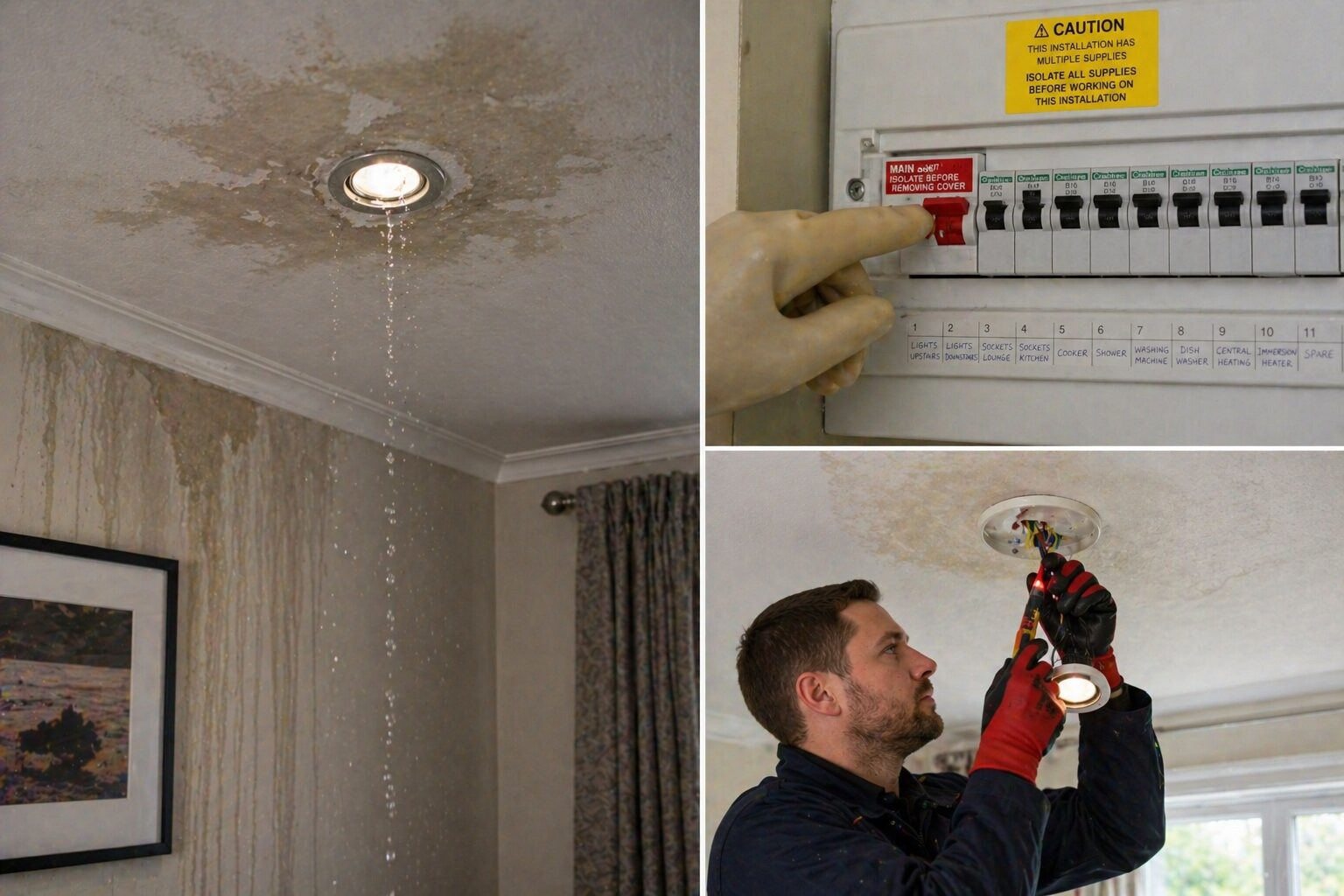
Water and electricity are never a good combination, but there is no need to panic. If water is coming through a light fitting, turn that light off immediately.
If it is not practical to isolate that circuit at the consumer unit, switch the light off, tape the switch in the off position and place a clear note over it saying not to use it.
In many cases, once the water source has been stopped and the fitting has been allowed to dry out for a few days, it will be fine. It is still sensible to have the fitting checked by a qualified electrician afterwards.
Back to top ↑Need help with emergency roofing damage?
If your property has suffered storm damage, a sudden leak or other urgent roofing issue, temporary action can help reduce further internal damage while the right specialist attends safely.
Contact Us