Heating Systems Overview
Heating systems are often confused with general plumbing, but they are not the same. If a pipe carries hot water to or from a radiator, or the issue involves the boiler or heating controls, you will usually need a heating engineer rather than a plumber.
This page explains the basics of domestic heating systems, common boiler and radiator faults, and when professional attendance is needed.

What Does a Heating Engineer Do?
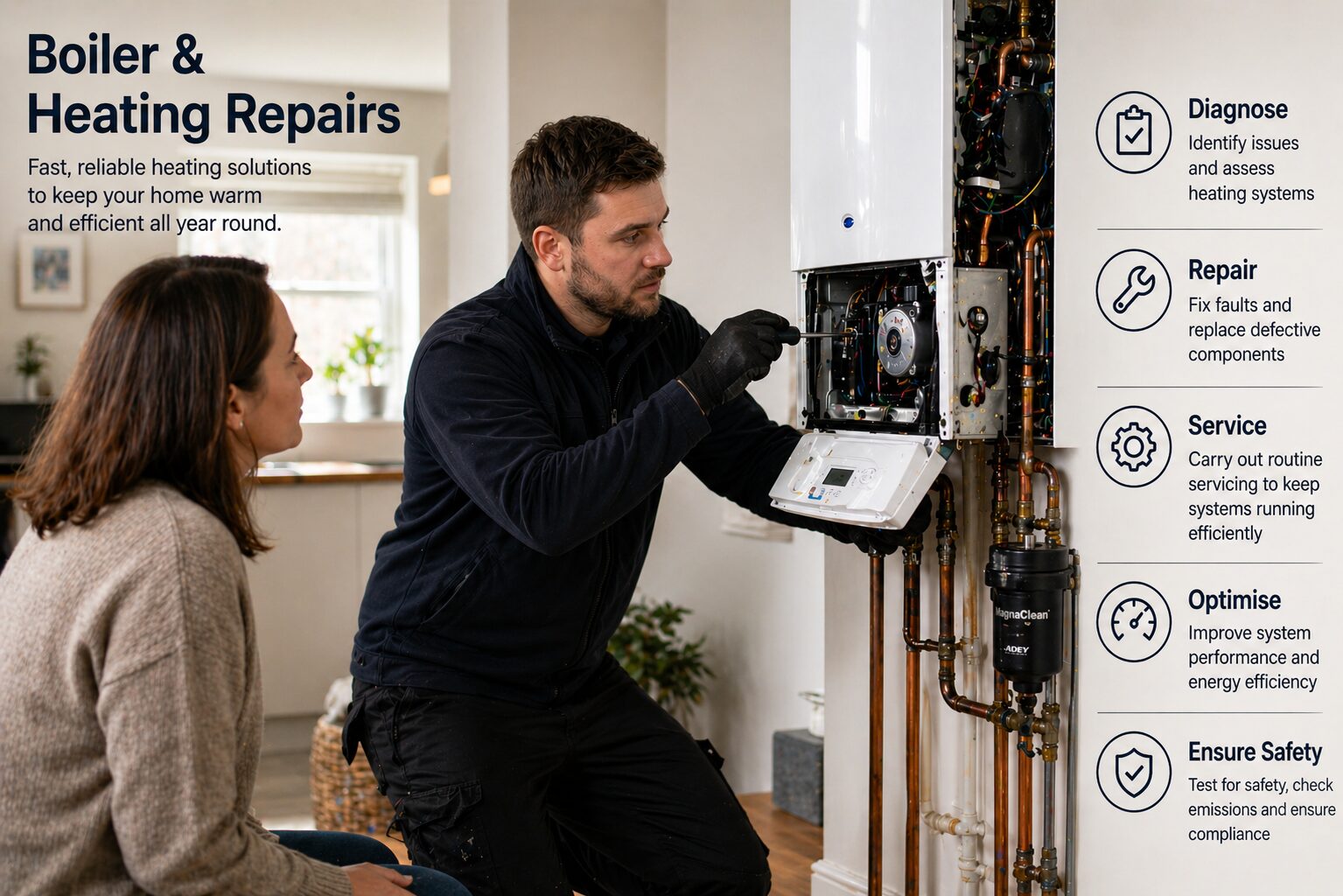
A heating engineer specialises in systems that provide heating and hot water throughout your property, including boilers, radiators and the pipework that connects them.
If a pipe carries hot water to or from a radiator, then it forms part of the heating system and should usually be dealt with by a heating engineer rather than a plumber.
This is important because heating system repairs often involve draining down the system, repressurising it and checking boiler operation afterwards. These are not standard plumbing tasks.
Back to top ↑Who Can Legally Work on Your Boiler?
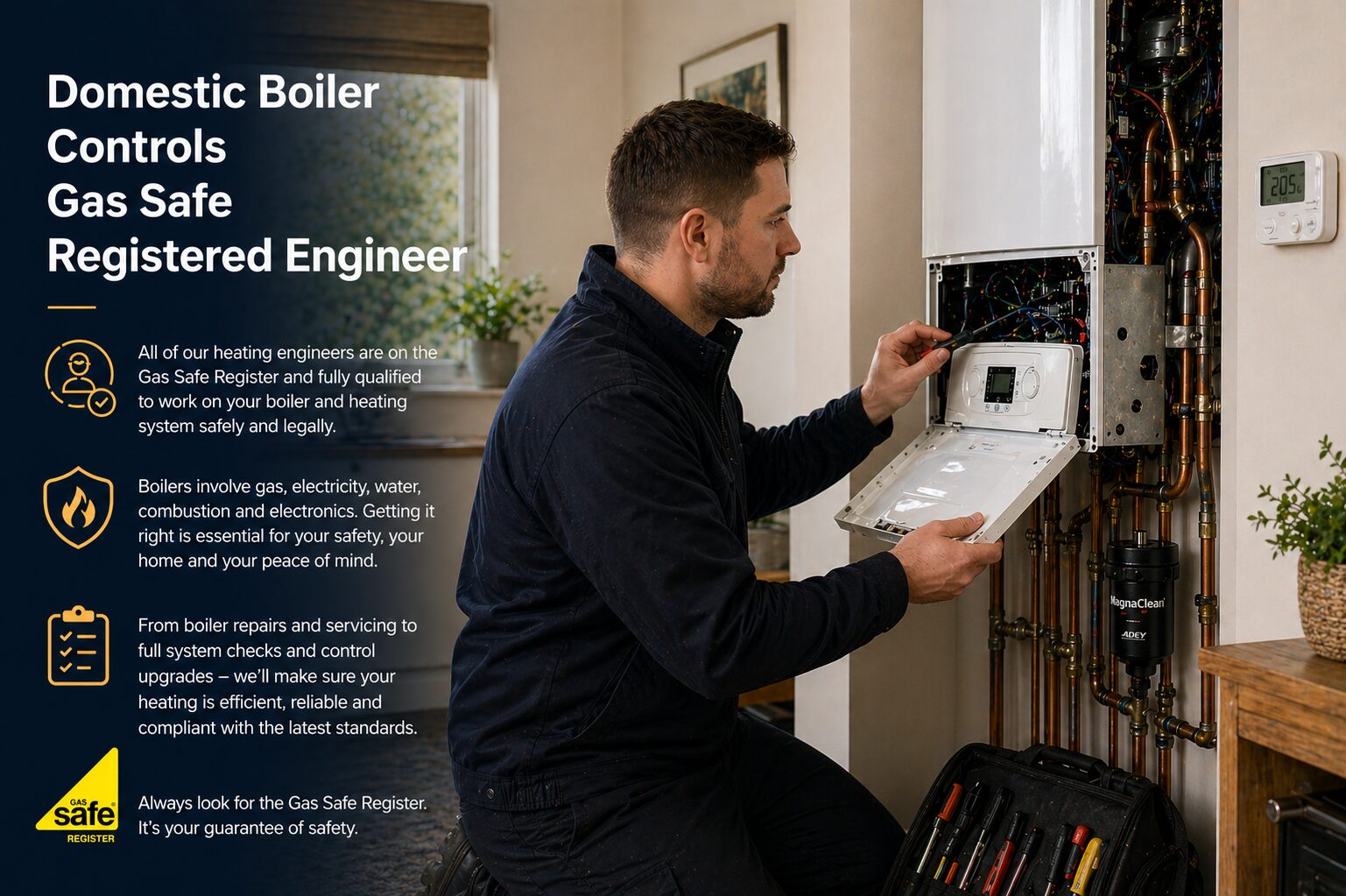
This is a huge subject and we will not be going into fine technical detail here, but the first and most important thing to bear in mind is that, with almost all boiler systems, anybody working on the system must be properly qualified.
Where gas is involved, anyone carrying out work must be on the Gas Safe Register. This is a legal requirement. Boilers involve water, electricity, fuel, combustion, electronics, pumps and safety devices, so they should never be treated as a casual DIY job.
It may be tempting to get someone informal to take a look at the boiler for cheap, but once tools come out, the law and the risks apply. If something goes wrong, the consequences can be very serious.
Back to top ↑Rules to Live By
There are a few simple rules that make a big difference to boiler safety, reliability and lifespan.
- Have your boiler serviced annually.
- Keep a carbon monoxide alarm near the boiler in line with manufacturer recommendations.
- Do not ignore recurring pressure drops, error codes or unusual changes in performance.
An annual service helps keep the boiler running safely and efficiently, may extend its lifespan, and can also help maintain eligibility under emergency repair cover.
Carbon monoxide alarms are inexpensive, easy to fit and potentially life-saving. They should always be seen as an essential part of boiler safety rather than an optional extra.
Back to top ↑Common Boiler Faults You May Be Able to Check
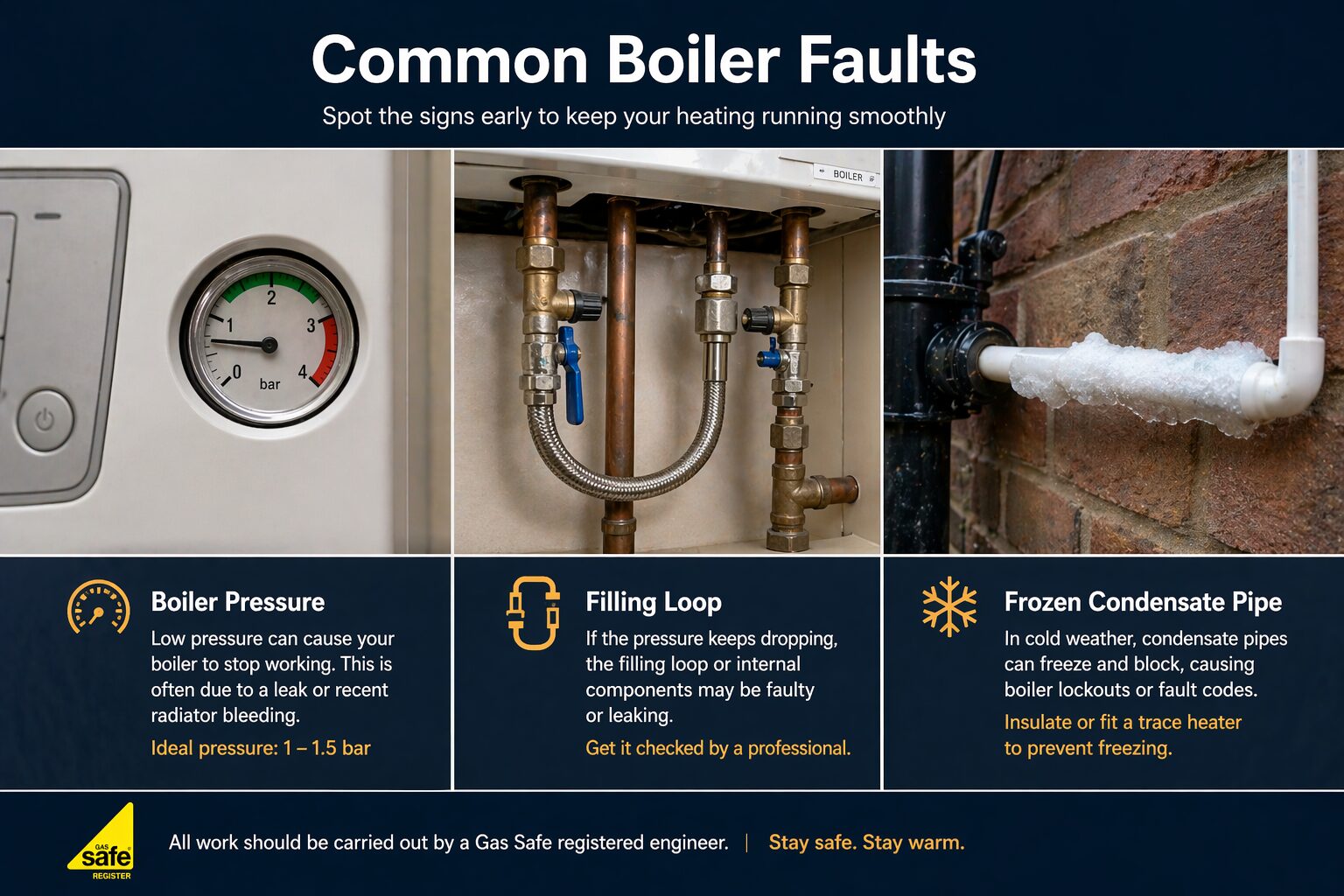
Some simple checks can sometimes be carried out safely by a homeowner if they are confident, particularly on a standard domestic combi boiler.
Low boiler pressure
If your combi boiler stops producing hot water, one of the first things to check is the pressure gauge. If the needle has fallen below the operating range, the system may simply need topping up using the filling loop.
This is often a straightforward job, but if the pressure keeps dropping, that normally indicates a fault or leak somewhere in the system and a heating engineer should investigate.
Frozen condensate pipe
A combi boiler produces condensate water as a by-product, and this leaves the property through a condensate pipe. If part of that pipe runs outside, it can freeze during very cold weather and cause the boiler to lock out.
This is often a simple problem to resolve with gentle warming and better insulation around the exposed pipework to reduce the risk of recurrence.
Back to top ↑Before You Call an Engineer
If you need to report a boiler fault, having the right information ready can make a real difference. The more useful detail the engineer has before attending, the better the chance of arriving with the right parts or diagnosing the problem more quickly.
- Make and model of the boiler
- Whether it is gas, LPG, oil or electric
- The main symptoms, for example no heating or no hot water
- Any error code or flashing lights shown on the display
- Whether the property has a hot water cylinder
- Whether there is a cold-water tank in the loft, if known
Boilers are complex appliances, and while many faults come down to a single failed component, multiple faults can occur, especially on older units.
Back to top ↑At Risk and Immediately Dangerous
These are serious safety terms. If an engineer uses them regarding your boiler, they are following legal safety obligations rather than giving an opinion.
At Risk means the boiler can technically still be used at your own discretion, but continued use is considered unsafe and not advisable until repair or replacement has taken place.
Immediately Dangerous means the boiler must not be used. In those cases, the engineer may attach warning documentation, apply labels to the appliance and isolate or cap the fuel supply.
If this happens, the engineer is not being difficult. They are acting to protect life and comply with the law.
Back to top ↑Radiators and the Heating System
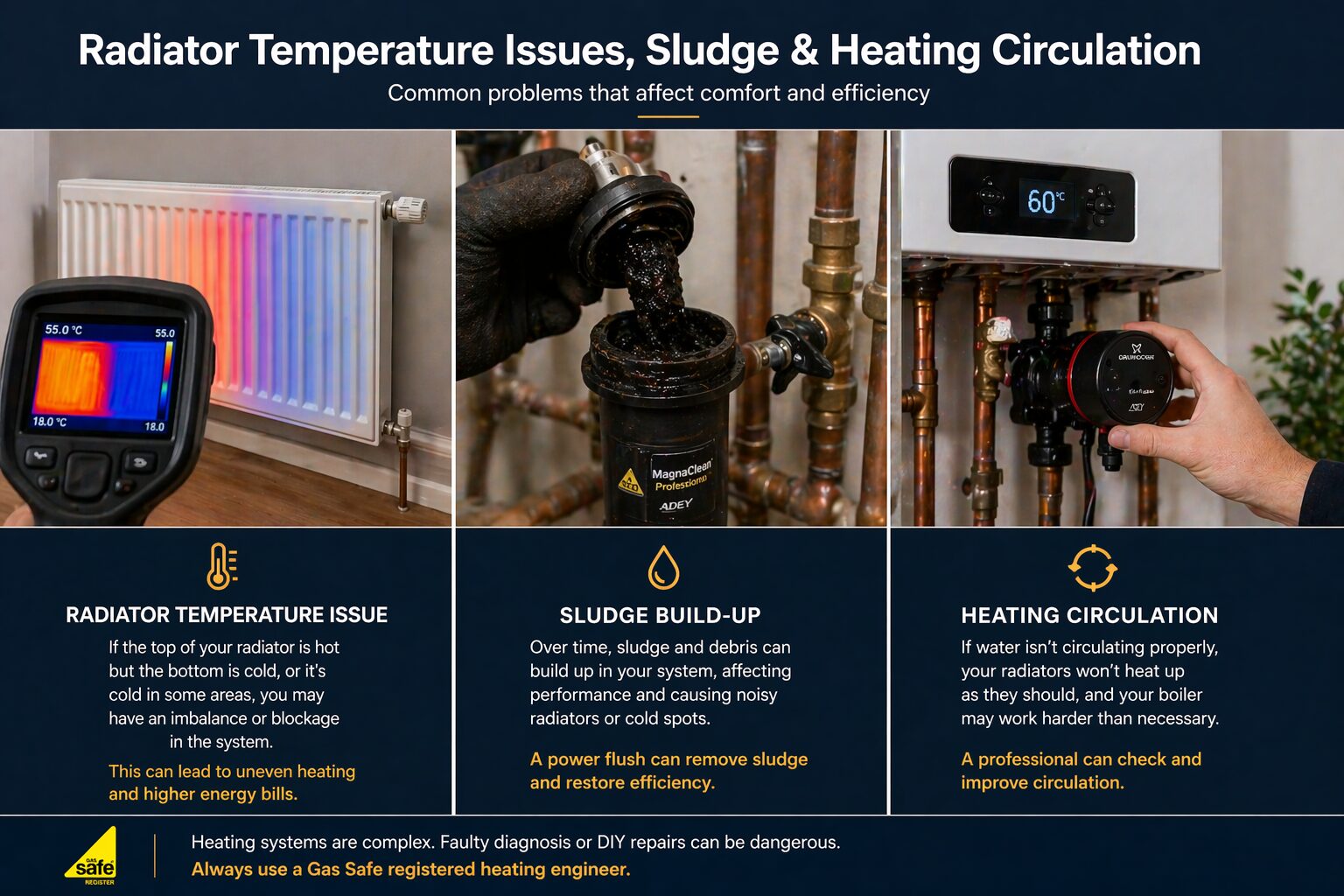
In most UK homes, heating is provided through a closed-loop system carrying hot water around a series of radiators.
If all or most of your radiators are not working, the issue is likely to be with the boiler, controls or thermostat. In that situation, a heating engineer is usually required.
If a radiator is hot at the bottom and cool at the top, the most likely cause is trapped air inside the radiator, and it may need bleeding.
If a radiator is hot at the top and cold at the bottom, this usually suggests sludge in the system. Sludge can reduce heating efficiency and, over time, may also damage the boiler.
Where sludge is present, it is often worth investigating a power flush. This process helps clear debris from the system and treatment chemicals are then added to help reduce future build-up.
If a radiator is leaking through corrosion, it will normally need replacing. Leaking valves or radiator taps will often require a heating engineer because the system may need draining down before repair.
Back to top ↑Bleeding a Radiator
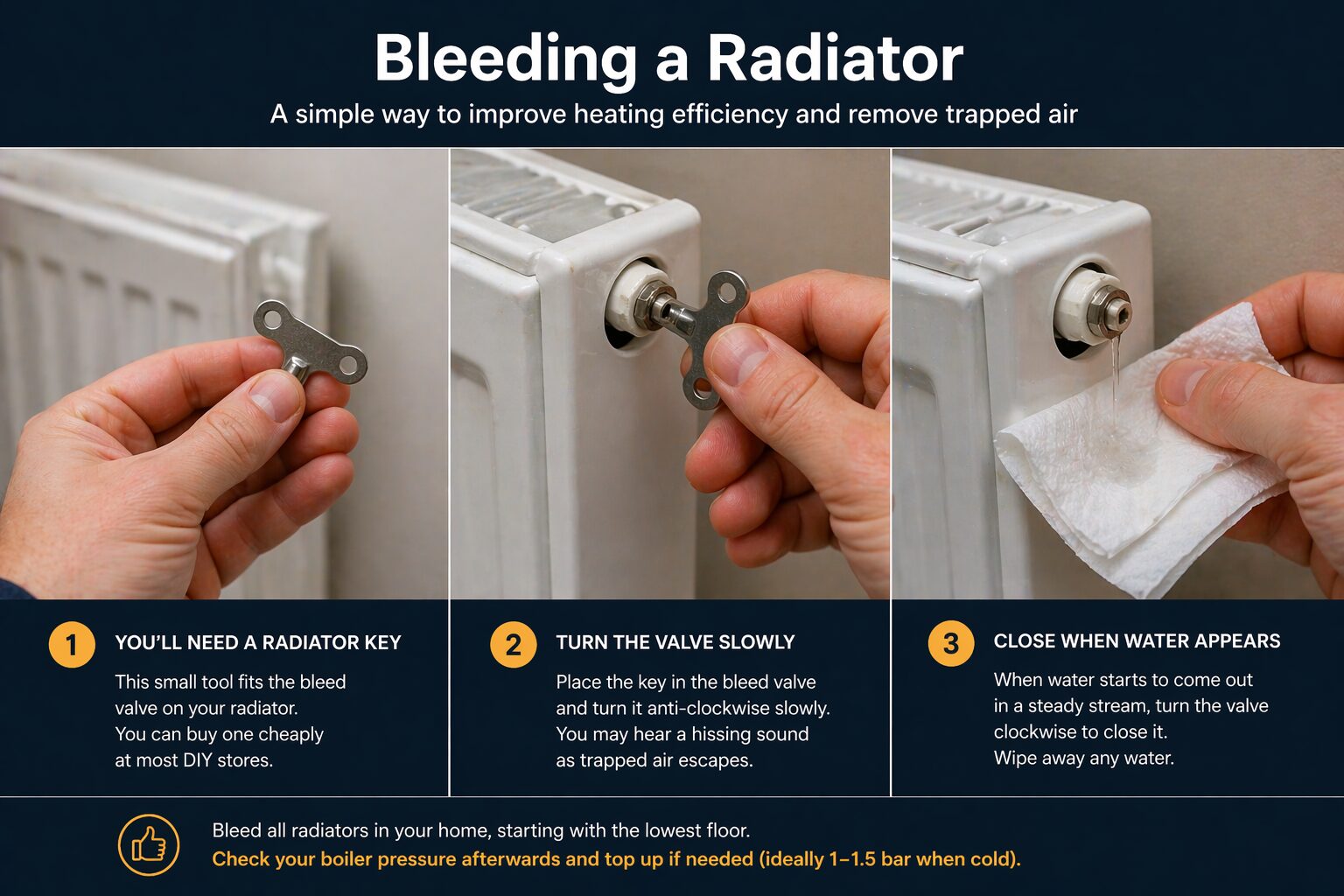
If a radiator has trapped air in it, bleeding it is often a simple job. You will need a radiator key, which is inexpensive and commonly available from hardware stores.
Locate the bleed valve near the top corner of the radiator. Place tissue or kitchen roll underneath the valve, then use the key to turn it slightly anticlockwise. Do not open it fully. As soon as you hear a hiss of escaping air, you know the trapped air is being released.
After a short while, the hissing will stop and water will begin to emerge. At that point, turn the valve clockwise to close it again. Wipe away any drips and keep an eye on it briefly to make sure no more water escapes.
If you are unsure or the valve will not reseal properly, it is safer to stop and seek professional assistance.
Back to top ↑Need help with a heating issue?
If your boiler, radiators or heating controls are not working as they should, getting the right engineer first time can help reduce delays and improve the chances of a quicker fix.
Contact Us